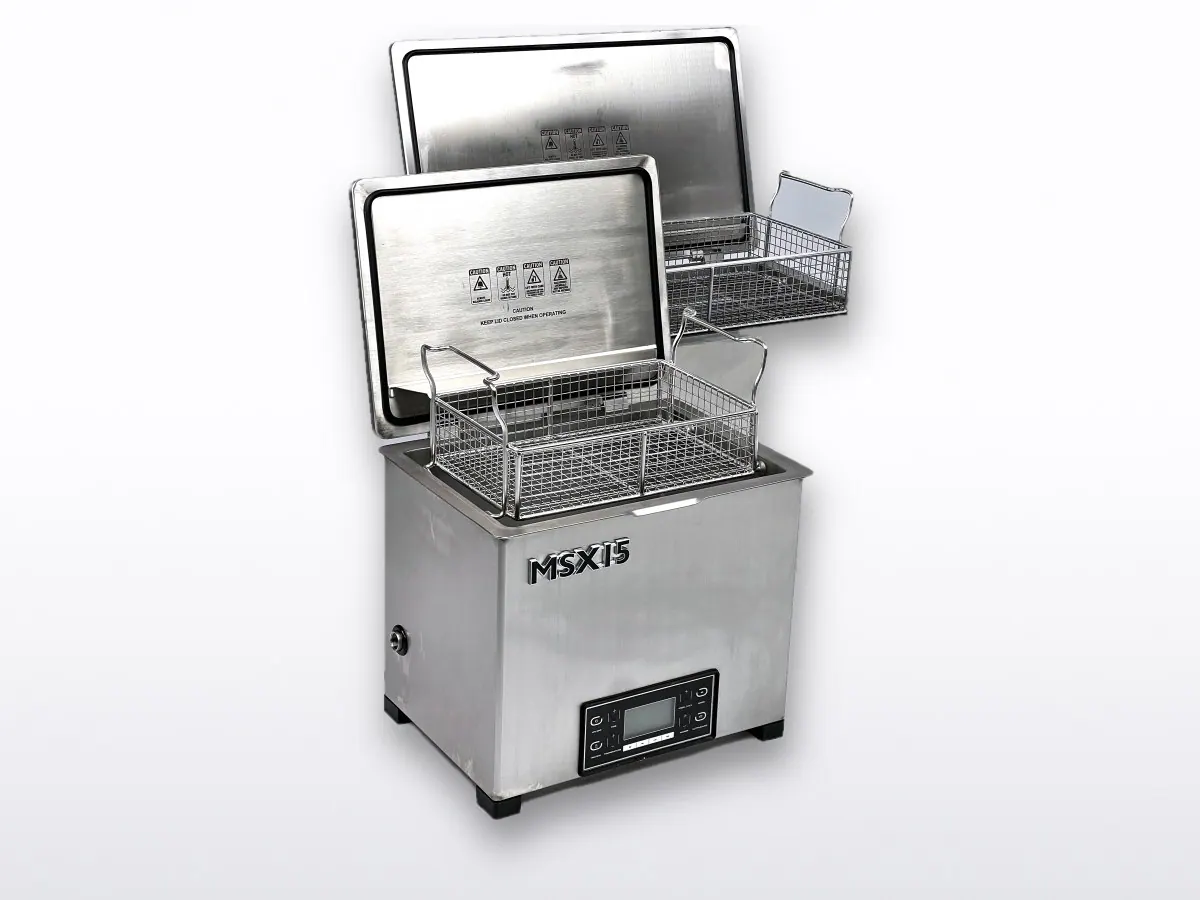
Stale fuel leaves varnish in every jet, emulsion tube and drilling. A heated ultrasonic bath lifts it from inside the passages, where spray cleaner and wire do not reach.
For motorcycle, marine, mower and small-engine, karting and classic car workshops. Benchtop MSX machines run from a 240 V socket. The solution is near-neutral and safe on aluminium bodies and brass jets.
Single carburettors and banks of two to four. Jets and slides in the same basket.
Workshop machines →Outboard carburettors that have sat with old fuel over winter.
Marine cleaning →Mower, whipper-snipper, chainsaw and generator carburettors. Small bodies, fine jets.
Small-engine work →Carburettors stripped and cleaned between meetings, the same way every time.
The MSX 15 →Twin and four-barrel carburettors, plus heads and manifolds in a bigger tank.
Car parts cleaning →A carburettor is a casting full of fine drillings. Varnish sets in the idle circuit, the emulsion tubes, the needle seat and the float bowl. Wire and spray clean the openings. They do not clean the length of a passage.
In the bath, cavitation works on every wetted surface at once. The solution fills each drilling, so the inside of a passage gets the same clean as the outside of the body.
Injectors and throttle bodies go through the same machine. American spelling is carburetor. The part and the process are the same.

A small tank from an online marketplace cleans a carburettor now and then. A workshop running them every week needs a machine that holds its heat and power all day. Check these before you buy.
| Check | What a workshop needs | MSX benchtop |
|---|---|---|
| Tank | Thick stainless that stands up to daily cavitation and heat. | Stainless 316, heated to 80 °C |
| Power under load | Cleaning power that holds when a full basket goes in. | Load sensing holds delivered power |
| Frequency | A finer field for small drillings and soft metals. | 45 kHz on the MSX 30, 40 kHz on the MSX 15 |
| Repeat cycles | The same time and temperature on every job. | Stored recipes on the panel |
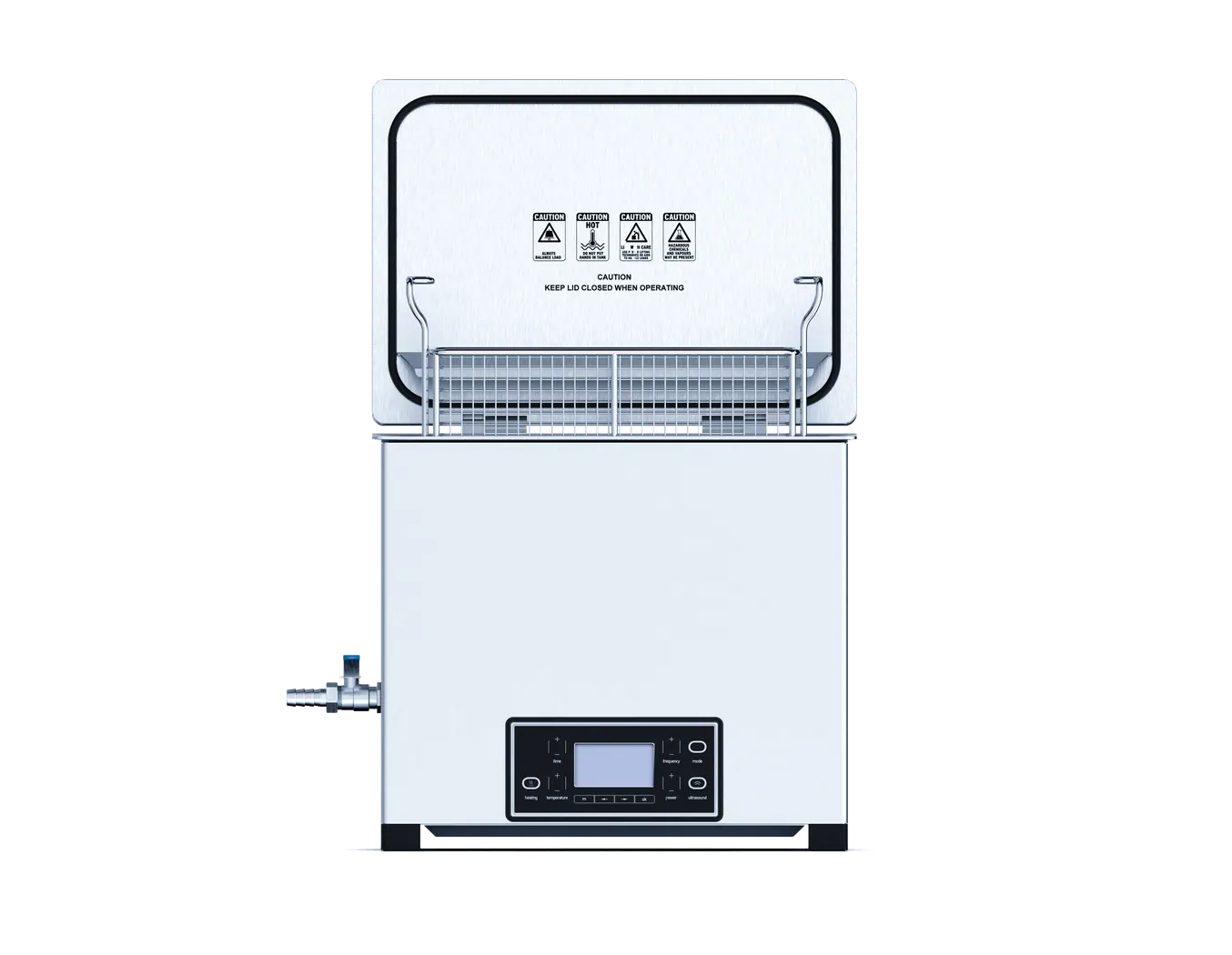
| Bath changes | A drain, not a tank to tip over the sink. | Ball-valve drain fitted |
| Chemistry | A solution matched to aluminium, zinc and brass. | AquaVantage 1696 GD, with settings |
| Back-up | Someone in Australia to ring when it stops. | 1300 647 664 and a 12-month warranty |
Knowing what the dirt is tells you how hard the clean will be, and what the bath cannot fix.
Petrol left standing goes stale. The light parts evaporate and what is left thickens to a brown gum, then sets hard as varnish. A carburettor left for a season on old fuel is the usual job.
E10 (petrol with 10% ethanol) takes up moisture from the air. Water settles in the float bowl and corrodes it. Aluminium and zinc grow a white powder. Brass jets go green.
Rust from the tank and dirt past a worn fuel filter end up in the pilot jet first. It has the finest drilling in the carburettor, so it blocks first and the engine will not idle.
Every metal in a carburettor reacts differently. This is why the solution is chosen for the metal, and why only the steel parts get Anti-Rust.
| Part | Usually made of | In the bath? | What to know |
|---|---|---|---|
| Body, float bowl, top cover | Aluminium or zinc die-cast | Yes | Short cycles in a near-neutral solution. Watch the colour. Zinc is the softer of the two. |
| Jets, emulsion tubes, needle seats | Brass | Yes | Small-parts compartment so nothing is lost. Strong alkali tarnishes brass. |
| Throttle slide | Aluminium or brass | Yes | Check the slide for wear marks once it is clean. |
| Screws, springs, throttle shaft, linkage | Steel | Yes | The only parts that rust. Anti-Rust dip after the rinse, or blow dry and spray with WD-40. |
| Floats | Brass or plastic | No | Clean by hand. Shake a brass float: if fuel moves inside, it leaks and is replaced. |
| Float needle | Brass or steel with a rubber tip | No | The rubber tip comes out of the kit. Replace it if the tip is grooved. |
| Diaphragms, O-rings, gaskets, plastic parts | Rubber and plastic | No | Heat and solution swell or crack them. They come off first and are replaced from a rebuild kit. |
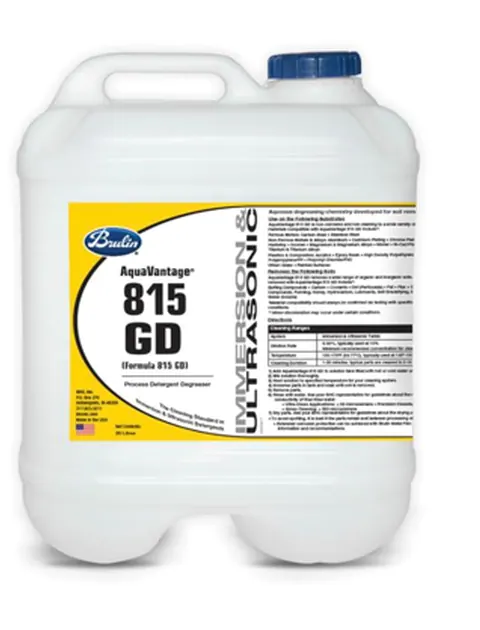
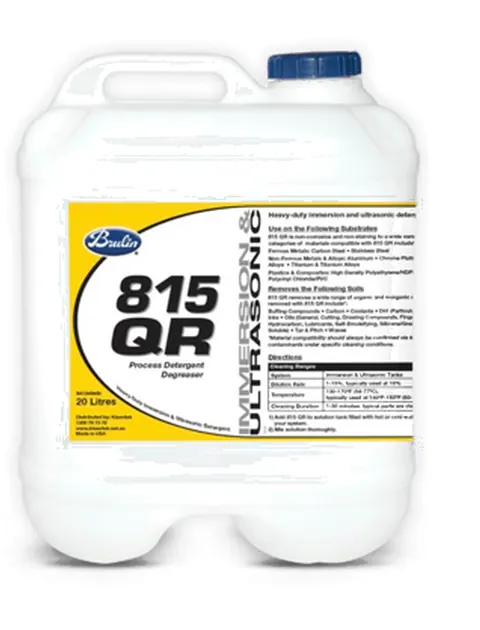
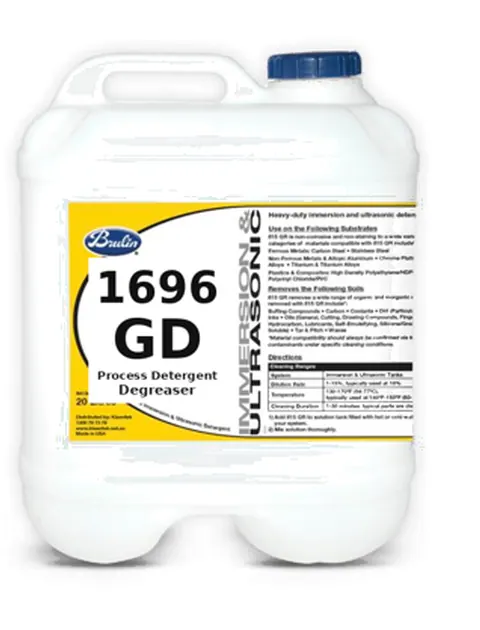
Carburettor bodies are aluminium or zinc die-cast. Jets and emulsion tubes are brass. All three react to strong alkali, so the solution is chosen for the metal first. Settings are from each product’s technical data sheet. Carburettor cleaning is light work for the chemistry: the soil is fuel varnish and gum, not oil or grease, so the bath runs weak. 1696 GD at 5%, or 815 GD at 7–10% for an all-aluminium body. FX Degreaser at 5% does an aluminium body inside its data-sheet window (50 °C, 5 minutes, rinse at once) but is not for zinc die-cast, so check the body before you use it. Prices include GST, delivered within Australia.

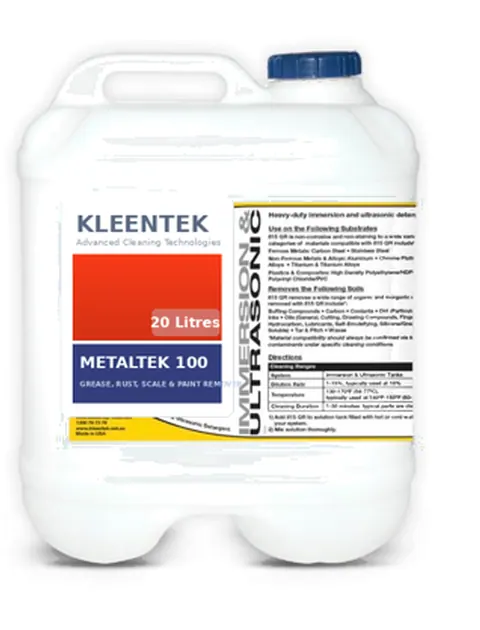
Near-neutral at about pH 8. Cleans fuel varnish off aluminium bodies and brass jets in one bath.
$242 10 L · $429 20 L · inc GST
Runs low-foaming above 49 °C. Test zinc die-cast bodies on a scrap part first.

Mildly alkaline, pH 12 as a concentrate, with a corrosion inhibitor built in. Safe on aluminium. A stronger clean for heavy varnish.
$242 10 L · $429 20 L · inc GST
Brass may discolour slightly, and zinc is not on its approved list. Test a zinc body first.

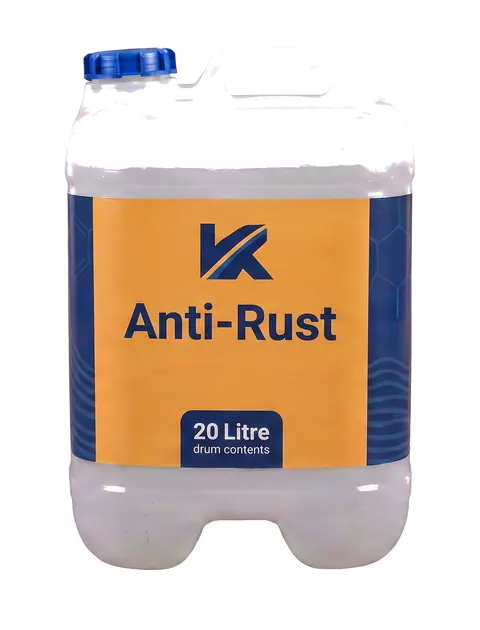
For the steel parts only: screws, springs, the throttle shaft and linkage. They flash rust within hours of coming out of a warm bath wet. Aluminium bodies and brass jets do not rust and do not need it.
$242 10 L · $429 20 L · inc GST
For steel only: keep it off aluminium and brass, it attacks them. Doing one carburettor? A spray of WD-40 on the dry steel parts does the same job.
MSX benchtop machines hold stored recipes. Save this one as Carburettors and every basket runs the same cycle. Run a second cycle for heavy varnish.
Good workshop chemistries, chosen for other parts. Each one attacks a metal found in a carburettor.

Our pick for general workshop parts in steel, cast iron and aluminium.
Not for copper, brass or bronze. Brass jets and zinc bodies stay out.
Product page → Not for carbs
Our heavy decarboniser for the intake manifold the carburettor bolts to, EGR (exhaust gas recirculation) parts and sumps.
High pH (13 as a concentrate), but it carries silicate inhibitors, so aluminium is protected at working strength. Zinc and brass are not, and many carburettors have both. For carburettors our pick is 1696 GD.
Product page → Not for carbs
Baked carbon, paint and rust off cast iron heads, blocks and steel parts.
Ferrous parts only. Never aluminium, zinc or brass.
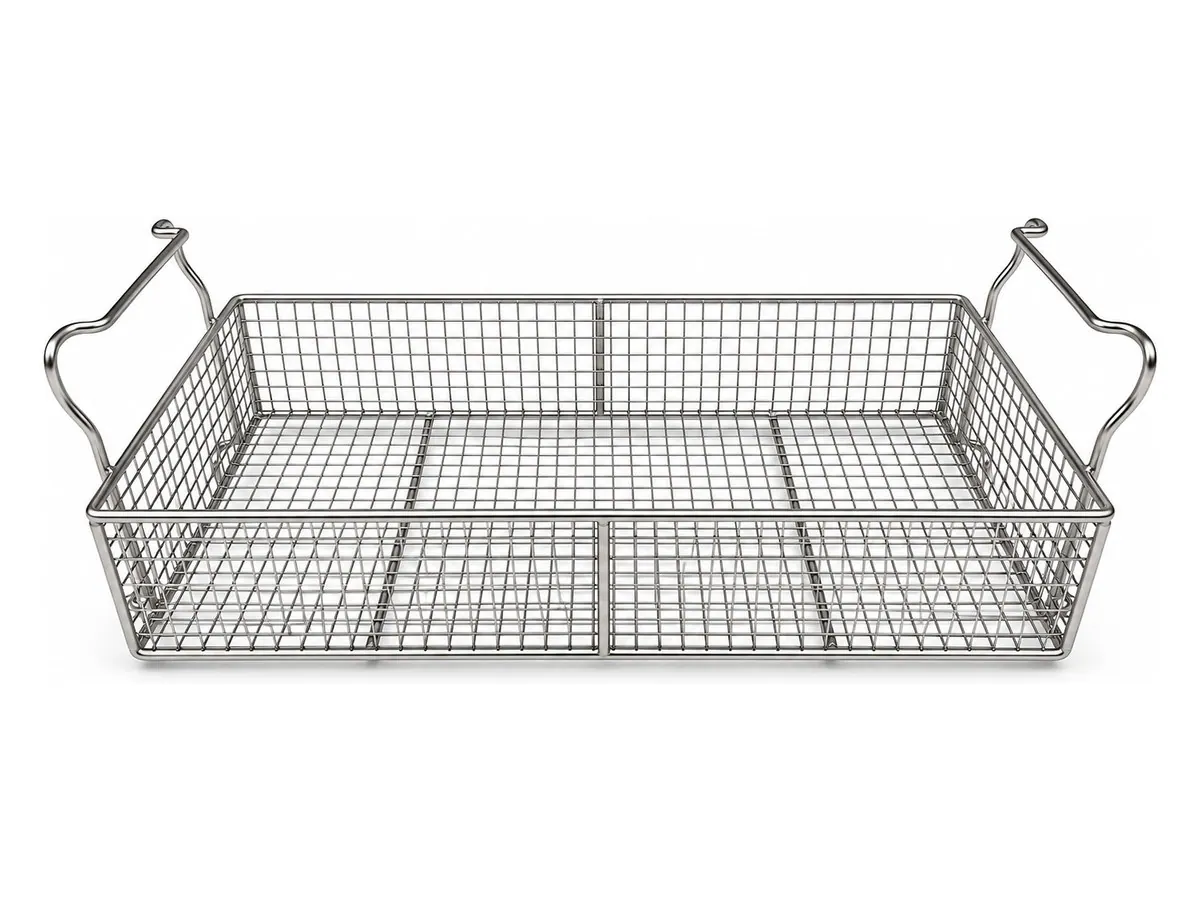
Product page →Measure across the widest carburettor or bank you work on, then pick the basket that takes it with room to spare.


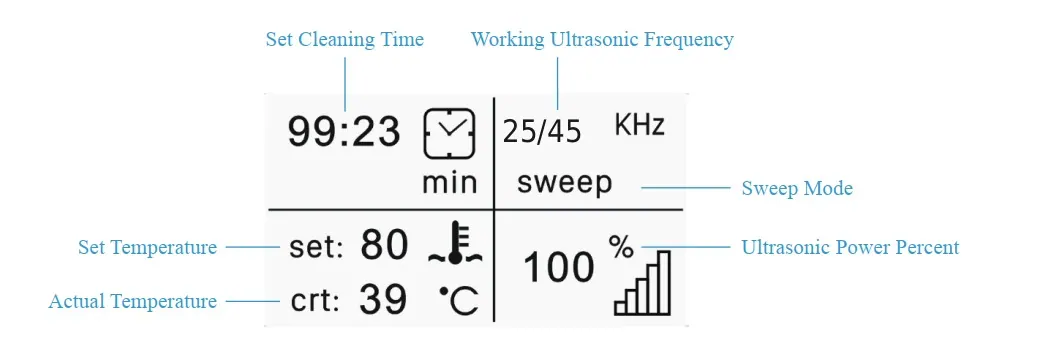
The MSX 30 has two transducer banks, one in the base and one on the side wall. 25 kHz gives a hard collapse for heavy soil on robust parts. 45 kHz gives a finer, denser field for small passages and soft metals.
For carburettors, run 45 kHz. Use 25 kHz for steel parts with heavy, baked soil. The dual-frequency guide explains the difference.

Floats, float needles, diaphragms, O-rings, gaskets, plastic parts and anything rubber. Remove the mixture screws and count the turns.
Body, float bowl, top cover, jets, emulsion tubes, needle seats, slides and the steel linkage parts.
A float needle and seat that stay stuck, worn jets, worn throttle shafts, corroded castings and perished diaphragms. A clean carburettor makes them easier to see.
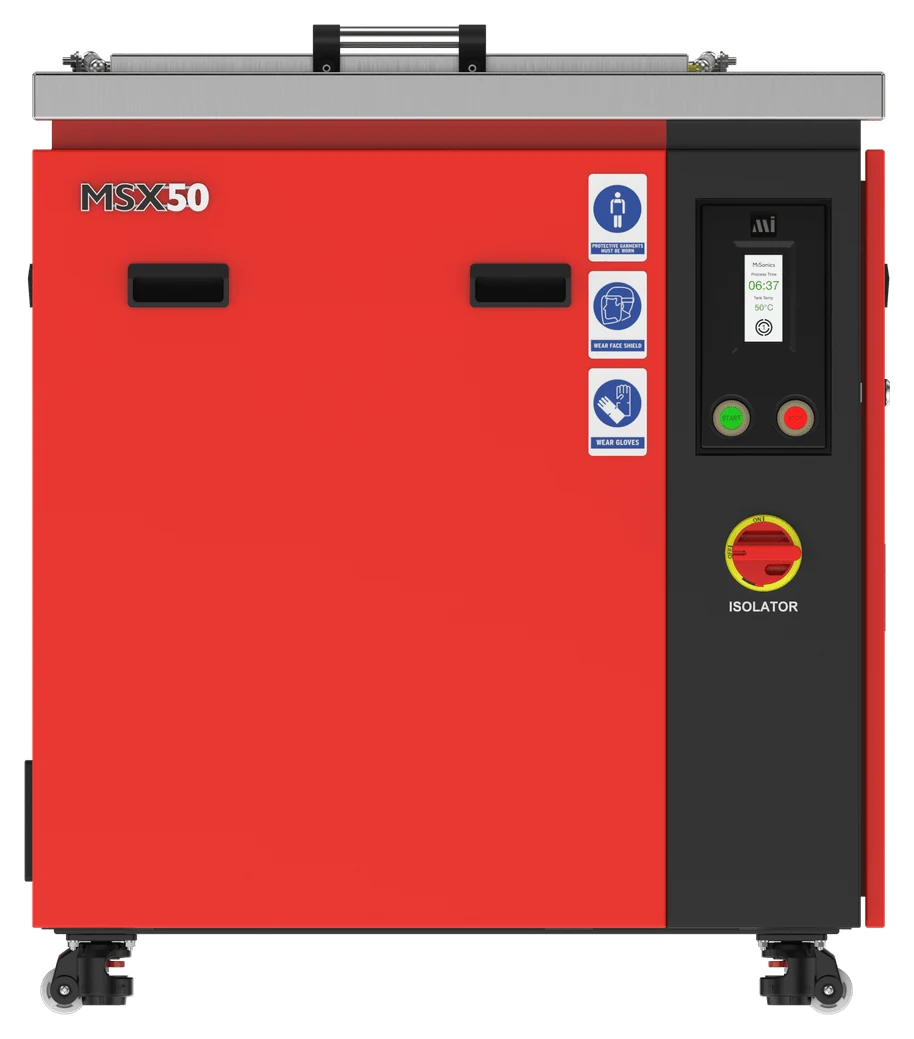
Carburettor cleaning in an ultrasonic bath is a strip, a short heated cycle, a rinse and a blow-through. The MSX 15 and MSX 30 are the carburettor cleaners for it: both hold a stored recipe, so every basket runs the same cycle.
Remove every rubber, plastic and float part. Keep each carburettor’s parts together.
Jets and screws will not come out? Run one cycle with the carburettor assembled. The varnish softens and the parts come free. Then strip it.
Bring the bath to temperature and degas it before the first load.
Small parts in one compartment. Body with the passages open to the bath. Float bowl upside down so no air is trapped in it.
1 to 5 minutes in 1696 GD. Lift the basket and look. Run another cycle if the varnish is still there.
Hot clean water to take the solution off. Compressed air through every drilling and jet.
Carburettor spray through each circuit by hand shows a blocked drilling. Never put the spray in the tank.
Anti-Rust dip or a spray of WD-40 on the steel parts. Reassemble with new seals and gaskets.
Why it happens. Bare aluminium carries a thin, clear skin of oxide that it grows on its own. That skin is what keeps it bright. A strong alkaline cleaner, the kind sold as a heavy degreaser, eats through the skin and starts on the metal under it.
Carburettor castings are not pure aluminium. They are mixed with silicon, copper and other metals so they cast well. When the surface is eaten back, the aluminium goes first and those other metals stay behind as a grey-black film. That film is the dark colour you see. Zinc castings go dull grey or white for the same reason.
Heat speeds the reaction up and time lets it go deeper, so a hot, strong bath left for an hour does the most damage. A near-neutral solution such as 1696 GD (about pH 8, close to tap water) hardly touches the oxide skin. That is why we use it, and why the cycles are short.
What to do. Lift the carburettor out between cycles. If the aluminium starts to darken, stop and rinse.
Short cycles in a near-neutral solution keep the casting its own colour. A casting already darkened only comes back with vapour blasting.
When a cycle that used to clean in five minutes no longer does, drain through the ball valve and refill. Read water quality.
New water is full of dissolved air that soaks up the cavitation. Why degassing matters.
Petrol, thinners and spray cleaner stay out. Flammable solvents.
| What you see | Why it happens | What to do |
|---|---|---|
| A jet is still blocked | A hard plug of varnish in the drilling. | Run another cycle. Then clear it with a jet-cleaning wire of the right size and blow it through. Never drill or enlarge a jet. |
| The casting has gone dark or grey | Solution too strong or too hot, or the soak ran too long. | Short cycles in 1696 GD at 5%, checked between. A darkened casting only comes back with vapour blasting. |
| White powder is left on the body | Corrosion from water in the fuel. | The bath loosens it. Brush it off with a soft brush. Any pitting underneath stays. |
| Steel screws are rusty the next day | Warm, wet steel flash rusts. | Dip the steel parts in Anti-Rust after the rinse, or blow them dry and spray with WD-40. |
| The bath is foaming | 1696 GD foams when it runs cold. | Run it above 49 °C, where it is low-foaming. 55 °C is the starting point. |
| Cleaning takes longer than it used to | The bath is spent or carrying oil, or fresh water was not degassed. | Drain and refill. Degas the new bath before the first basket. |
| Parts have a film after drying | Solution left on the surface. | Rinse in hot clean water, then blow through every drilling. |
They block the transducers and wear the tank. Always use the basket.
Seals, diaphragms and plastic floats swell or crack in a heated bath.
Cavitation turns a solvent into vapour over a heated bath. Water-based solution only.
An hour in the bath eats the oxide skin off aluminium and leaves it dark. Short cycles and a look between them.
Varnish softens with heat. Bring the bath to temperature before the first basket.
Parts stacked on each other shade the ones underneath. One layer, passages open.
Order the solution online today. Machines ship bench-tested with a 12-month warranty. All prices include GST.
Ambient to 80 °C, with a safety thermostat.
One per part family. The operator picks it, loads and presses start.
Delivered power holds steady as the basket goes in.
A ½" drain fitted, so the bath changes without bailing.
240 V single-phase. Plugs into a standard workshop socket.
Condensate deflector fitted. Holds heat between baskets.
Heads, manifolds, injectors and driveline parts.
Outboards, props and marine engine parts.
From carburettor banks to cylinder heads.
Every workshop part, every machine size.
Every cleaning solution, by soil and metal.
What to look for in an ultrasonic machine.
Tell us the carburettors you work on and how many a week. We will confirm the machine and the solution.