Industrial Duty
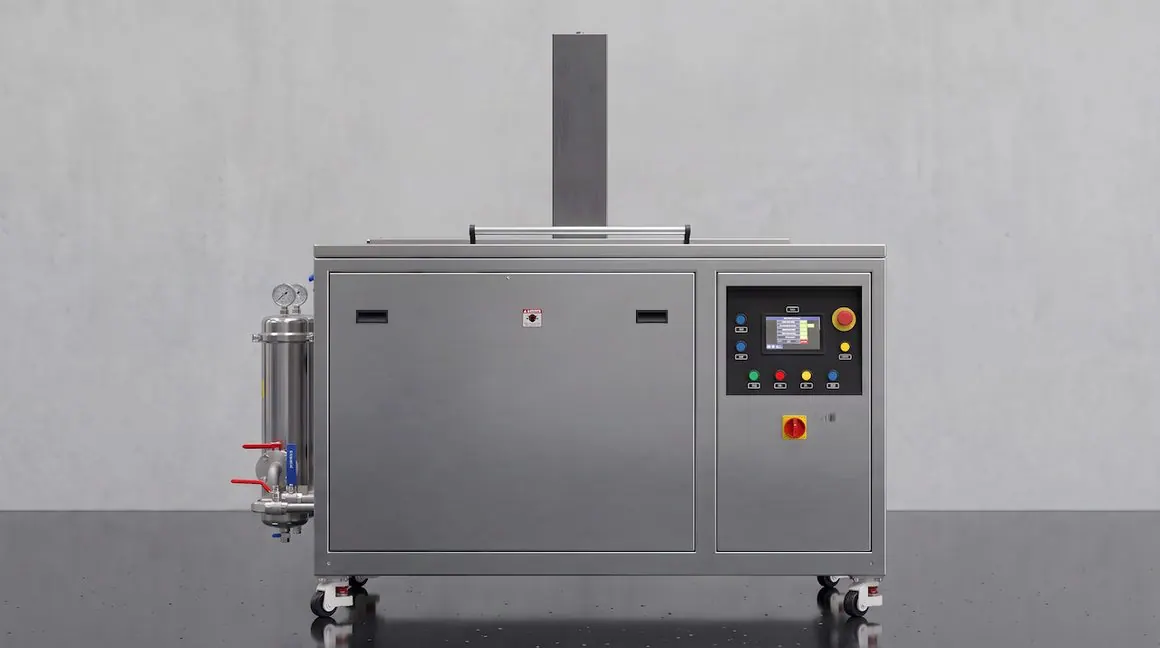
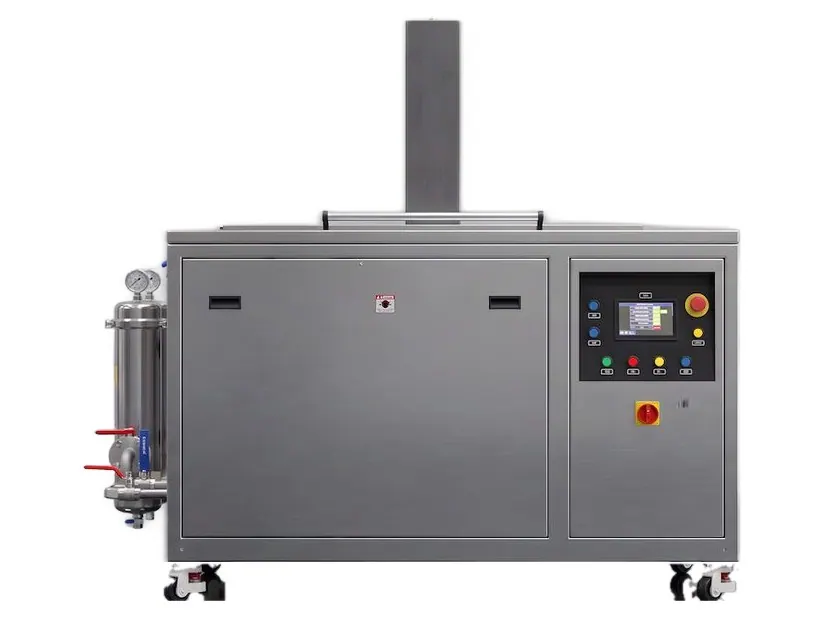
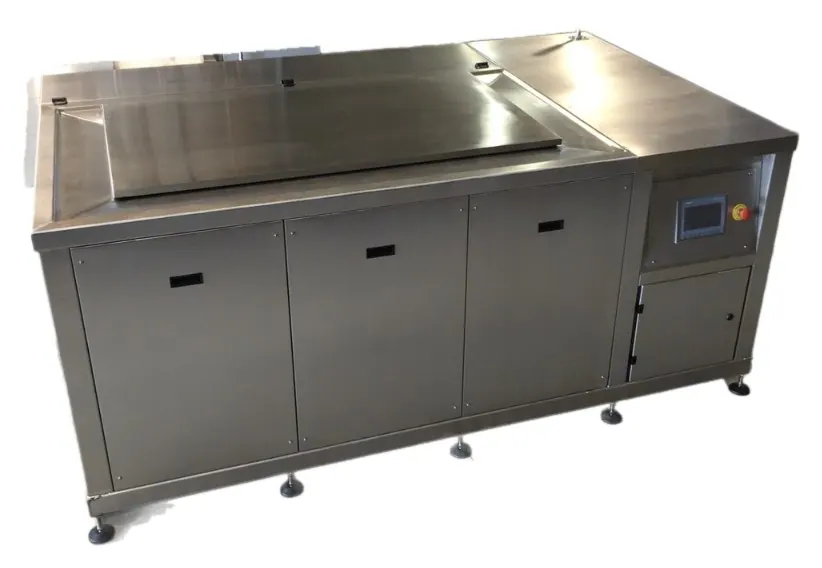
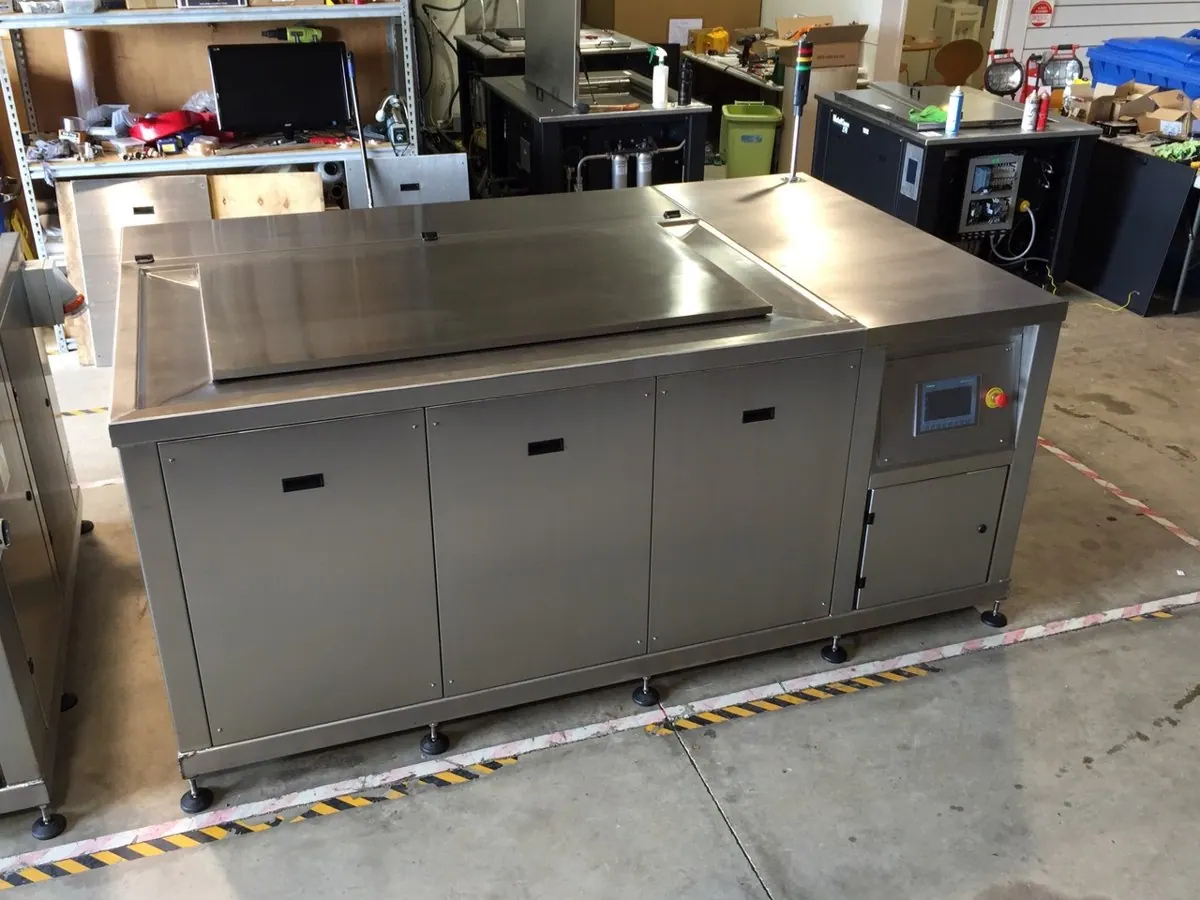
Floor-standing ultrasonic tanks for heavy soils: carbon, scale, ash and packed grease. The load goes in by hoist or crane, or on the optional lifting platform, which lowers it into the bath and raises it to drain. Automated lids and filtration are optional too. Each model page lists the options it takes.
All machines quoted to site, ex GST.


These are the jobs EvoSonic tanks are bought for. Each one links to the documented process: soils, chemistry, cycle and verification. Tell us your part and it gets worked the same way.

Ring-belt coke, gallery varnish, jacket rust — blocks and heads stripped in one immersion, gauged unchanged. Documented process on file.
The rebuild process →
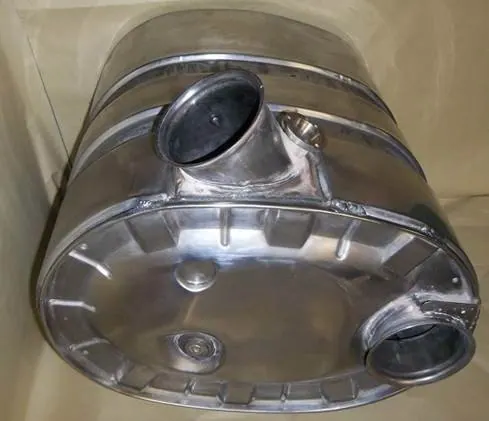
The ash regeneration leaves behind, removed in the two-bath process — flow-tested per filter, at truck-fleet volume in one tank.
The two-bath process →
Fin-side matting and tube-side oil out of whole cores — mining, rail and marine cooling back to design capacity without fin damage.
The core process →Shortlist by tank opening and working depth first. The part must go in, immerse fully and come out draining. Then check power against the soil. Every model name opens the full specification.
| Model | Tank | Opening L × W | Working depth | Ultrasonics | Heating | Supply |
|---|---|---|---|---|---|---|
| EVS 180 | 180 L | 750 × 500 mm | 480 mm | 3,000 W · 2 gen | 12 kW | 415 V 3-ph |
| EVS 300 | 300 L | 750 × 750 mm | 400 mm | 9,000 W · 6 gen | 12 kW | 415 V 3-ph · 17 kW |
| EVS 600 | 600 L | 1200 × 800 mm | 550 mm | 10,500 W · 7 gen | 21 kW | 415 V 3-ph |
| EVS 800 | 800 L | 1570 × 630 mm | 700 mm | 15,000 W · 10 gen | 21 kW | 415 V 3-ph · 36 kW |
| EVS 1200 | 1,200 L | 1500 × 1200 mm | 600 mm | 18,000 W · 12 gen | 28 kW | 415 V 3-ph |

The lifting platform is an option. With it fitted, the load goes on at deck height by trolley or forklift. The platform lowers it into the bath, holds it there for the cycle and raises it to drain over the tank. Agitation is a further option. The overhead crane stays free for other work.
Without the platform, the load goes in by hoist or crane onto a basket frame, and the hoist does the raise-to-drain. The standard EVS 800 is built this way.
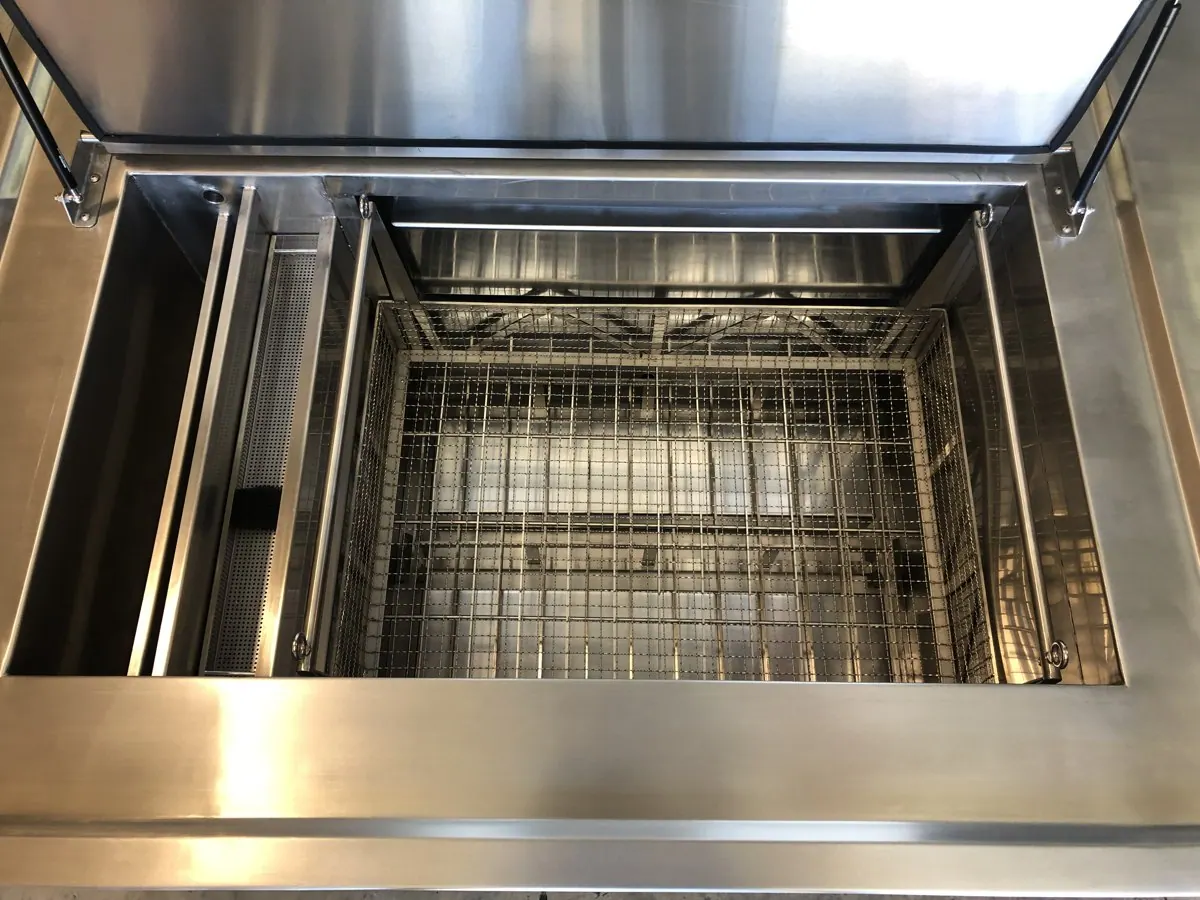
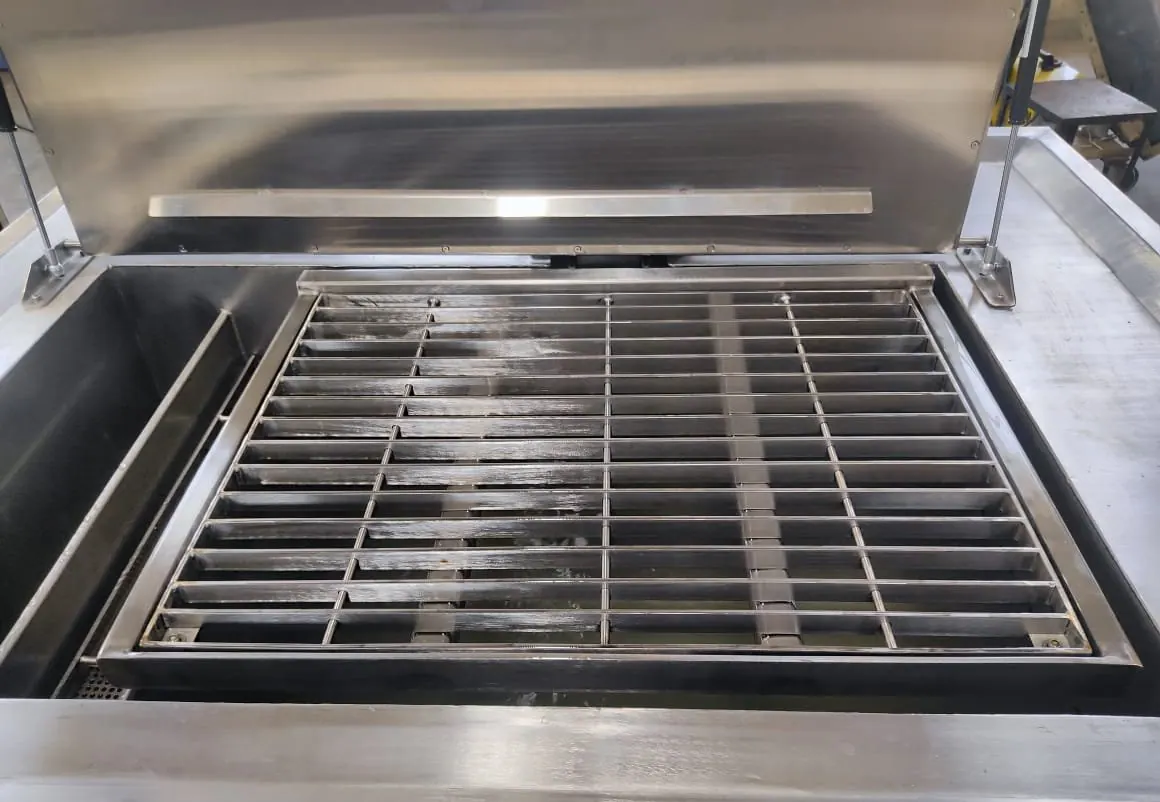
Shown: an EVS 300 with the platform fitted, lid open, platform up.
Deck-height loading by trolley or forklift, powered immersion and raise-to-drain. Without it, the load goes in by hoist or crane.
25 kHz, stepless 10–100%. Generator arrays from 2 to 12, sized to the soil.
Displacement weir, oil capture and interceptor per model. Stainless filtration is an option. The solution stays in service longer between dumps.
SS316 on most models, SS316L on the EVS 300 and SS304 on the EVS 800. Plate thickness and insulation are listed on each model page.
One recipe per part family and every cycle logged. Siemens on most models, IDEC on the EVS 800.
Our engineers can read the PLC, diagnose and adjust remotely.
The oscillation stage, motorised, for an even clean on dense, heavy baskets.
Hinged double-skinned or manual insulated lids, by model. Automated and pneumatic lids are optional.
Services check, chemistry, commissioning and operator training. One price, ex GST.
The EVS 1500-PL, EVS 7000-PL and custom EVS builds are on EvoSonic Heavy.
Heavy-duty tanks from 1,500 to 10,000 litres for heat-exchanger bundles, engine blocks, cores and frames. When the part is bigger than any standard tank, we design a custom EVS around it.
See EvoSonic Heavy →Every EvoSonic delivers the ultrasonics stage with the bath defended. The oscillation stage comes with the optional agitating platform. Matching rinse tanks and drying stages are quoted with the machine; fully sequenced lines are built as a SonoLine.

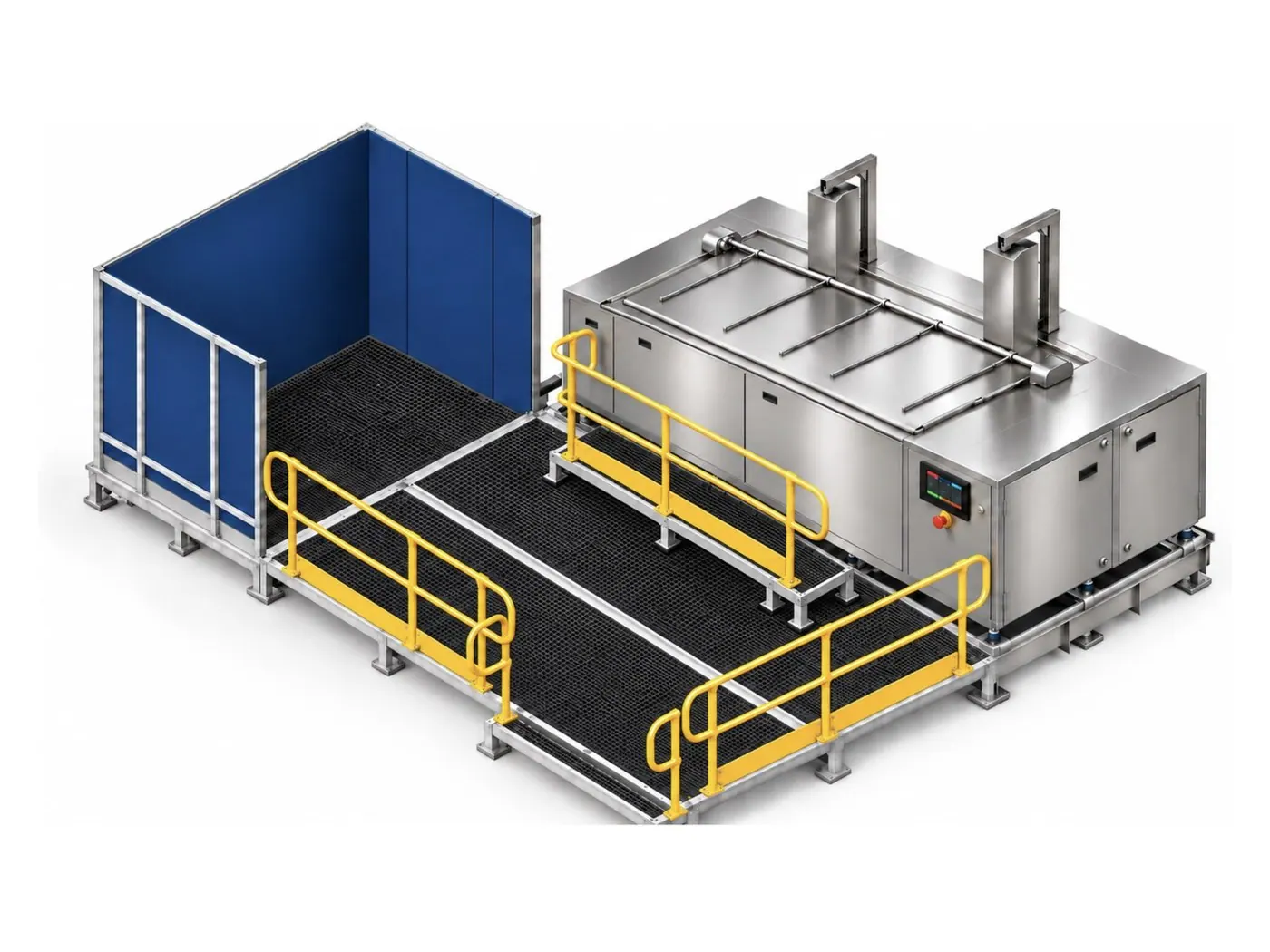
Bunding to catch what comes off the load, a raised grated deck so the work happens at working height, and a screened washbay for the wet work beside the bath.
Built into the machine from the start, or as a separate unit that drops in beside one already on the floor. Quoted as its own line, ex GST.
Bunding, raised platforms and washbays →See also: How an industrial ultrasonic tank works — a cut-away of every part of the machine, and why the big tanks get rod resonators rather than base-plate transducers.