Corrosion from a wet phone, flux from a rework job, grime from a decade of service — the repair trade's soils all live under components where nothing else reaches. This is the bench tool that does.

Boards out of housings; batteries OFF and out, always. Screen the exclusion list (unsealed relays, some MEMS/mics per BOM).
Electronics-safe aqueous chemistry, 40–55 °C, gentle power, 5–15 minutes — flux, electrolyte corrosion and contamination out from under BGAs and connectors.
Ionic residues carried off in a clean DI rinse — the step that turns "looks clean" into "measures clean".
Warm-air dry until genuinely dry — hours for dense boards, never minutes — then test. Powering a damp board undoes everything.
Electrolyte corrosion under shields and connectors is the killer; cavitation reaches it the day the device arrives. Recovery rates climb when cleaning is same-day and complete.
Flux and residue under BGAs breed dendrites and callbacks. The tank cleans where the brush and swab genuinely cannot.
Boards clean while techs diagnose the next device — the queue moves without another hire.

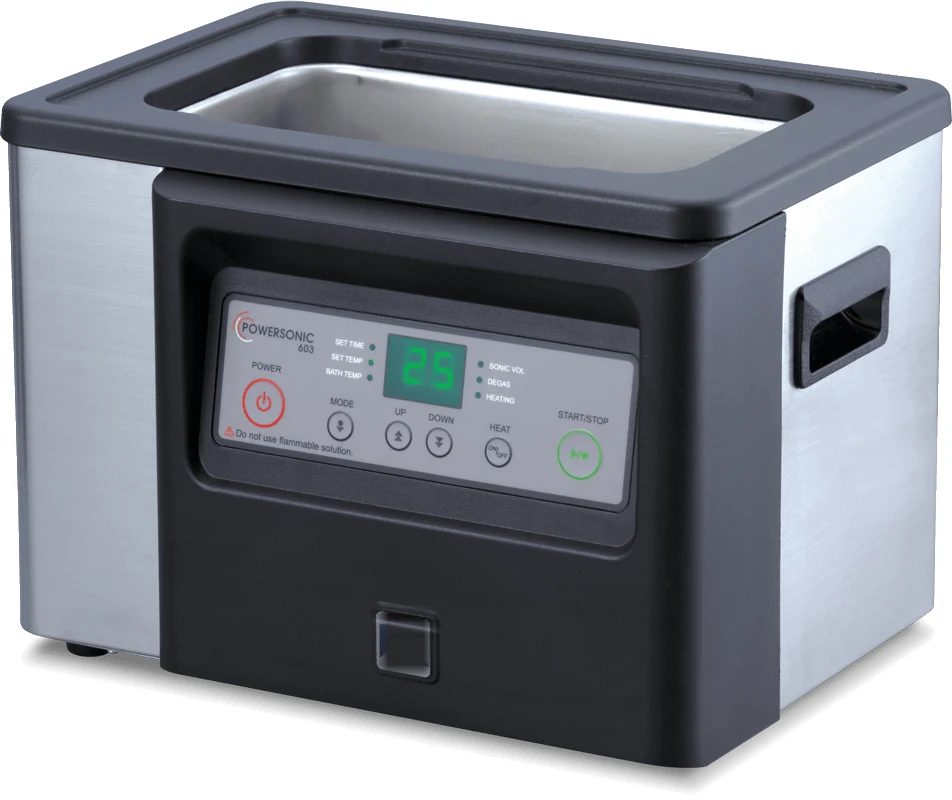
Phone and device repair: board-sized tank, bench footprint, liquid-damage triage on tap.
View or buy →
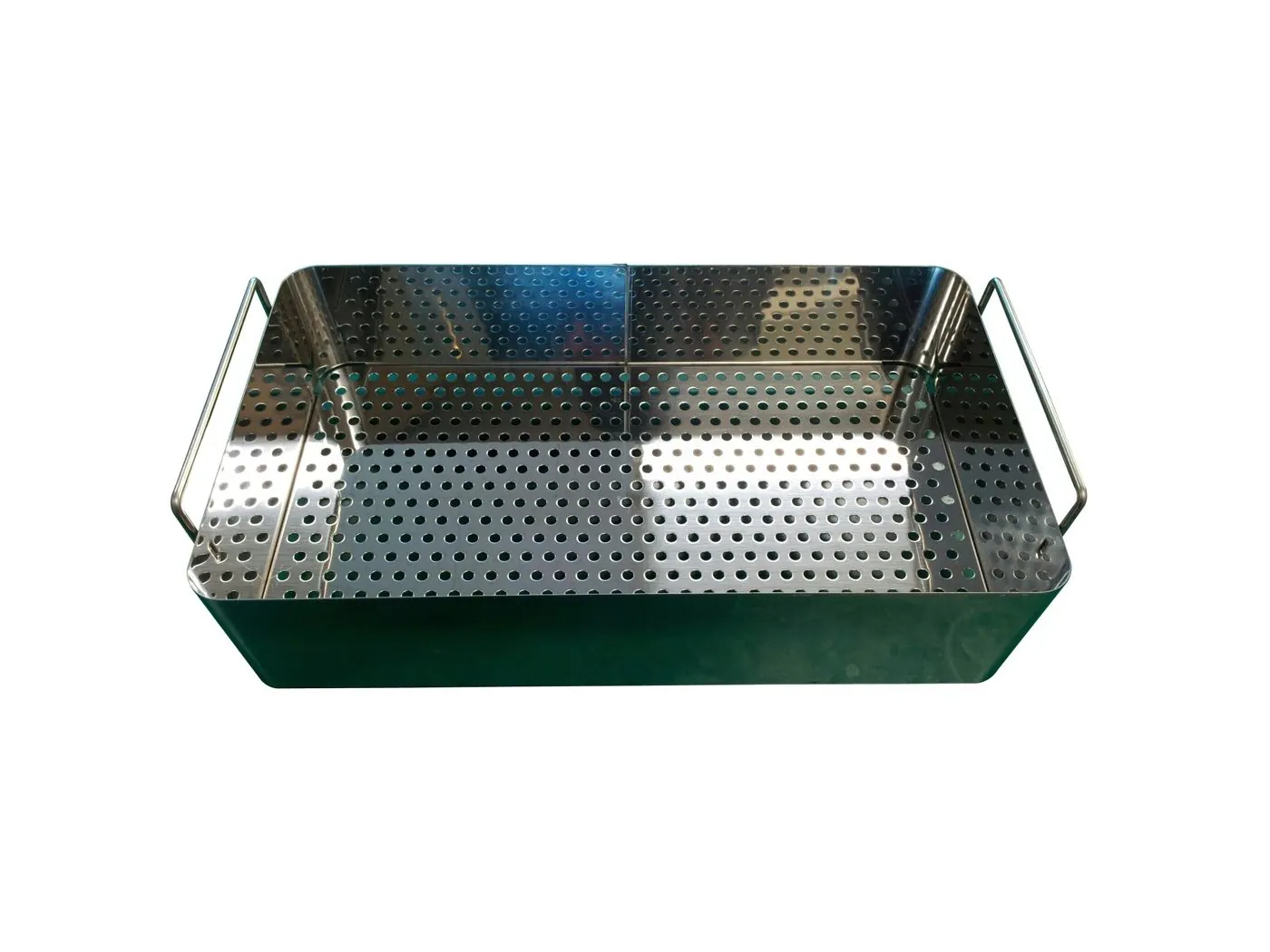
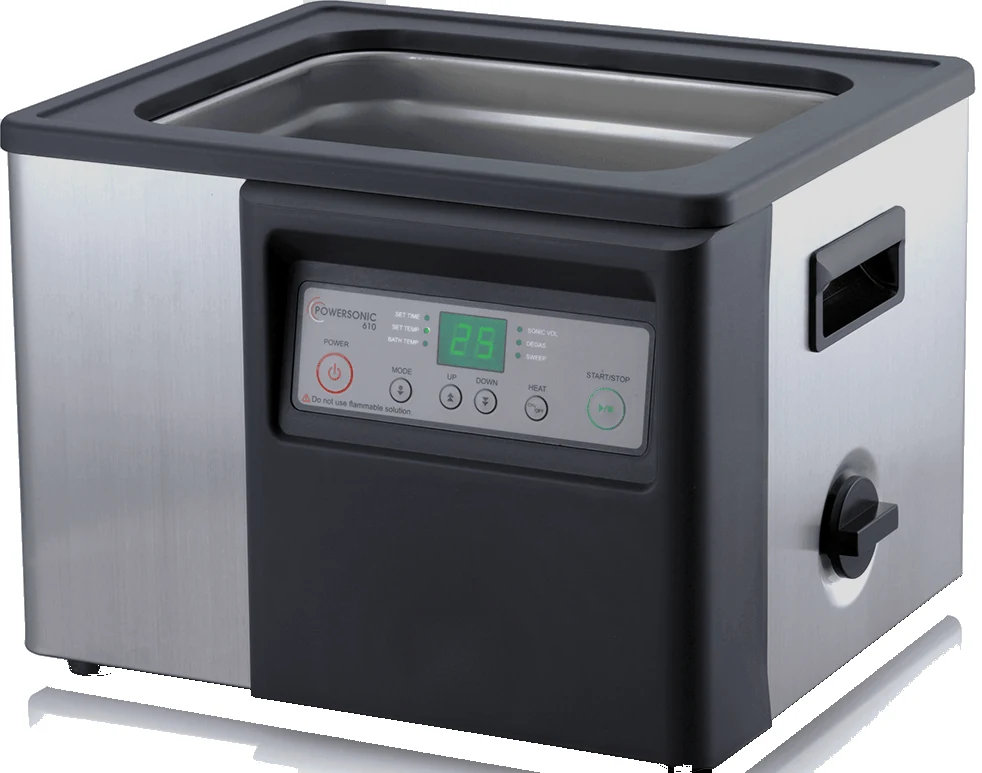
Repair centres and industrial electronics: full boards, ECUs and batch work in the wide basket.
View or buy →Production electronics cleaning to IPC limits is documented in our PCB case study.
| Chemistry | AquaVantage 1696 GD, near-neutral at pH 7.9–8.3 — the 3 L PS 603 with 1696 GD is the classic electronics bench setup |
| Temperature | 40–55 °C |
| Power | Low |
| Time | 5–15 minutes |
| Then | DI rinse · thorough warm dry · then power |
Starting points only — part condition, chemistry and load set the final card. We help you dial it in.
Board-sized tanks at bench scale, and the one chemistry that is safe on copper, solder and plated contacts.
Board-sized tank on a bench footprint; liquid-damage triage on tap. The classic electronics bench setup with 1696 GD.
Full boards, ECUs and batch work in the wide basket.
Near-neutral at pH 7.9, non-silicated and non-phosphated, safe on copper, cadmium and solder. 40–55 °C, low power, 5–15 minutes, then a DI rinse and a thorough warm dry before power.
Production cleaning to IPC limits is in the PCB flux removal case study. Read how to choose the best industrial ultrasonic cleaner.
Tell us what the part is, what comes off it, and what it has to pass. Technical sales will tell you whether ultrasonics is the right answer for that part and what it takes to run it on your own floor.